Winter Outdoors: My Ultimate Guide for Cold-Sensitive People


By Karina Durand, Outdoor & Travel Collaborator
Anyone who knows me knows how sensitive I am to the cold. Picture this: I sometimes shiver even in the summer! But since I love being outside all year long, I’ve learned all the best tricks to stay warm (and dry), no matter what Mother Nature throws my way. Here’s my ultimate guide to enjoying winter outdoors without compromising on comfort.
Invest in Quality Clothing
My first tip for avoiding the misery of winter cold is simple: dress properly. A good winter outfit should include a few key pieces, each with its own function, combined using the layering technique (more on that later).
I recommend choosing high-quality items made with durable technical fabrics. For jackets, waterproof breathable fabrics like Gore-Tex or Pertex are great options. For clothing, merino wool and polyester are proven performers. Take your time in outdoor shops to compare products and don’t be afraid to invest a little more than usual. The goal isn’t to pay for brand names, it’s to get gear that performs well and lasts.
On a tight budget? Don’t hesitate to consider second-hand clothing, such as on Marketplace. Some major brands, including Arc’teryx, Patagonia and The North Face, also offer trade-in or resale programs directly on their websites.
If winter is hard for you to enjoy because you start shivering the moment you step outside, upgrading to higher-quality clothing will change your life.
Master the Art of Layering
Now that you’ve built a wardrobe of high-quality technical essentials, it’s time to combine them based on your activities and your tolerance to cold.
This is where layering, also known as dressing like an onion, becomes incredibly useful. The principle is simple: stack different garments to maximize comfort and stay dry.
There are three categories of layers, each with its own purpose:
- The Base Layer : The first layer, worn directly against the skin, wicks away moisture and sweat. Choose breathable, quick-drying pieces, including your underwear. If you’re especially cold sensitive, go for a thicker base layer.
- The Insulating Layer : The second layer traps heat and keeps you warm. A fleece jacket or a synthetic insulated mid-layer are great options. In very cold weather, feel free to stack more than one insulating layer.
- The Protective Shell : The third layer is the outer jacket that shields you from wind, rain and snow. Choose a lightweight shell that is both waterproof and windproof. Make sure that its collar comes up to your nose and that its zippers are sealed, even on the pockets.
Your winter wardrobe should also include these essentials: waterproof pants, several toques of varying thickness, at least two or three pairs of mittens (much better than gloves at retaining warmth), neck warmers and a few pairs of warm socks.
Keep in mind that even if you start your activity with a slight chill, your body temperature will rise once you get moving. As soon as you start warming up, remove a layer.
Mistake to Avoid: Cotton
When you’re active outdoors, you sweat, even in the cold. Cotton absorbs sweat and takes hours to dry. The result? You end up damp inside your gear and start shivering. Stick to technical fabrics like merino wool or polyester. These fabrics wick away moisture and dry quickly.
Choose High-Intensity Activities and Short Breaks
If you’re sensitive to the cold, look for higher intensity outdoor activities, such as cross-country skiing, snowshoeing or winter biking. Pick trails that are a bit challenging while staying within your ability. The more sustained the effort, the less likely you are to feel cold.
Aim for outings of up to two hours and plan shorter, more frequent warm-up breaks. It’s better to stop for 10 minutes every hour than 40 minutes every two hours. These quick breaks help regulate the temperature difference between indoors and outdoors.
Another favourite tip: pack extra mittens, toques and socks in your backpack. You’ll be glad to put on fresh, dry ones during your break!
Mistake to Avoid: Blasting the Heat in the Car
When it’s freezing out and you’re driving to a ski hill or winter activity, it’s tempting to crank up the heat. Avoid this! Keep the car at a moderate temperature, unzip your jacket, and remove your hat and mittens. Even better: get dressed for your activity once you arrive, including putting on your boots there.
Good to Know!
Bringing your family’s outdoor gear in the car? The items insured under your home insurance policy may also be covered when they’re temporarily outside the home, subject to the terms, limits and exclusions of your policy. For example, skis, snowshoes, skates, winter bikes, and sleds may be covered under your home insurance, even under a tenant’s policy. Learn more here.
Eat Well and Stay Hydrated
Your body generates heat when digesting food. That’s why having a nourishing meal before heading out in freezing temperatures is a great strategy, as is snacking on protein-rich foods during your activity.
Also, cold weather reduces your sense of thirst, so people often drink less. But dehydration can increase fatigue, which in turn makes you feel colder. Bring a water bottle in an insulated container to keep it from freezing and stay hydrated throughout your outing.
Mistake to Avoid: Granola Bars
Granola bars are easy to stash in a backpack. However, I recommend avoiding them, especially in winter, since in the cold, they tend to harden like concrete and aren’t very filling. Opt instead for trail mix with nuts, seeds and dried fruit, and add a little something extra like chocolate pieces or yogurt-covered raisins.
Boost Your Comfort with These Handy Accessories
If you’re dressed warmly using the layering method, well fed, well hydrated and choosing high-intensity activities, you should be able to spend hours outdoors without shivering, even in very cold weather.
To stack the odds in your favour, here are three magic accessories to improve your comfort:
- Hand warmers: Slip reusable hand warmers, such as those from Hot Poc, inside your mittens and say goodbye to frozen fingers.
- Felt insoles: Choose boots a half-size or full size bigger than usual and add felt insoles. Your toes will thank you.
- An insulated container: Pack a Thermos-style container filled with hot soup or hot chocolate. Guaranteed comfort at the summit.
To truly enjoy winter in Québec when you’re cold sensitive, it’s essential to be well equipped and to have a few strategies up your sleeve to stay comfortable outdoors, no matter the temperature. I hope my tips help you make the most of the cold season. Enjoy your winter!
Did you like this article? Follow Promutuel Insurance on social media to stay up to date with my next tips.
The trademarks mentioned in this blog article are cited for information purposes only. They are not affiliated with Promutuel Insurance and do not sponsor this article.
About Karina Durand
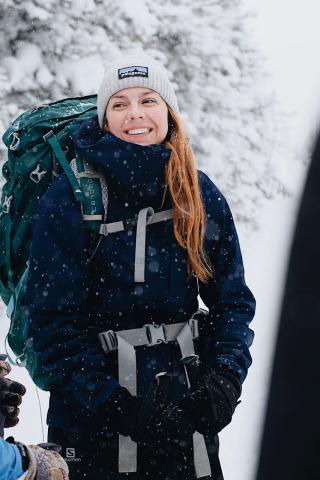
Karina is passionate about the outdoors and travel. From hiking in New Zealand to scuba-diving in Fiji, to sailing across the Pacific Ocean from Mexico to Australia aboard a small 12-metre sailboat, she doesn’t shy away from adventure. A devoted nomad, she explores the world’s wildest places with a well-equipped backpack and an infectious positive attitude. Here, she shares her best tips for enjoying winter without suffering from the cold.