My Quick Guide to Camping in a Car


Summer is slowly approaching, and with the return of warmer days comes the start of a brand-new camping season. What if I told you there was a way to camp that is affordable, comfortable, and safe, while also giving you almost total freedom? Would you like to know more? If so, this quick guide to camping in your car is for you. You will find explanations of the concept, tips for trying it out, and a few pointers to help you plan your first adventure. Let’s hit the road!
What type of camping is right for you?
Ground tent, rooftop tent, trailer, recreational vehicle, ready-to-camp unit, car camping… There are so many ways to camp! How do you choose the one that is right for you? Start by answering these questions to better define your needs:
- What level of comfort are you looking for?
- Where would you like to camp?
- What activities would you like to do during your stay?
- Will you be camping with children?
- What is your budget?
If you’re looking for an affordable camping experience that offers more comfort than sleeping in a tent on the ground, if you want to explore remote areas with complete freedom, enjoy outdoor activities, and head into town, and if you’re camping without children, then car camping is a great option for you.
This style of camping, which is growing in popularity in Quebec and elsewhere around the world, is an appealing alternative to van life, a lifestyle many people dream about, but one that is not accessible to every budget.
The advantages of camping in your car
The concept of camping in your car is simple: you adapt a regular car, the one you drive every day, so you can camp in it. In other words, you prepare your vehicle so you can “live” in it for a few days. You set off on an adventure by car, and everything is designed so you can sleep in it, eat in it, travel with it, and make the most of it in as much comfort as possible!
There are many advantages to camping in your car. First, it is affordable, since enthusiasts often have just one vehicle, which they use both for everyday life and for road trips. Also, because you sleep in your car, you do not always have to pay for campsites, since there are plenty of free places where you can legally park overnight. I will come back to that later.
Second, camping in your car gives you a lot of flexibility. No fixed itinerary or detailed planning is required. It also lets you go to places where there are no accommodation options and discover slightly more remote areas.
Third, it is a fairly comfortable type of camping and, in some cases, safer than tent camping. A car offers a small, cozy cocoon where you can take shelter from moisture, wind, rain, and animals, something many camping enthusiasts appreciate.
What about rooftop tents?
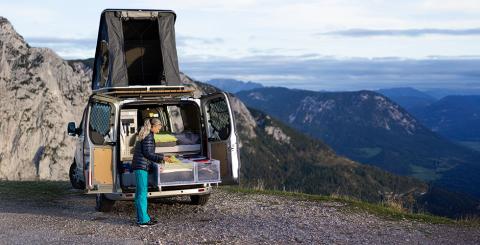
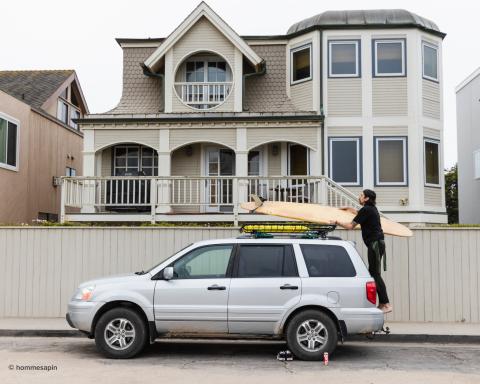
Rooftop tents are soft-shell or hard-shell structures installed on the roof of a vehicle. In this scenario, you do not sleep inside the car, but on top of it. The advantage of rooftop tents is that they free up space inside the vehicle, which is practical for sports enthusiasts who have bulky equipment, such as a surfboard, paddleboard, or bicycle.
Keep in mind that rooftop tents are quite expensive. New models range from $2,000 to $6,000. Their installation is not always straightforward and often requires two people. During the winter, you also need to store them in a dry place with a stable temperature.
Camping in your car in 4 easy steps
Step 1: Choose the car based on your trip
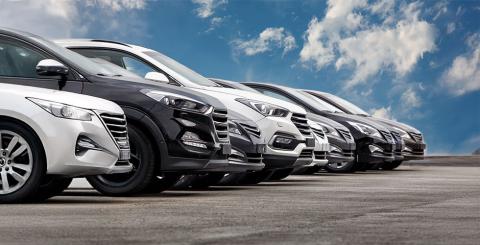
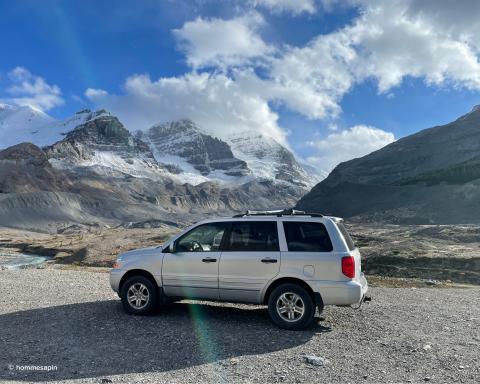
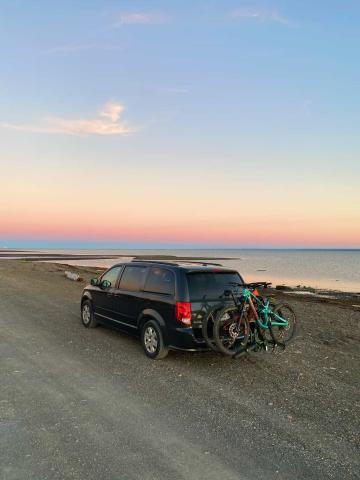
To camp in your car, you obviously need a car. From a small two-door Toyota Yaris hatchback to an imposing Honda Pilot, not to mention the Dodge Grand Caravan, great car-camping experiences are possible in vehicles of very different sizes and configurations. Generally speaking, minivans and sport utility vehicles are well suited to camping as a pair.
Whatever the make or model of your car, if you plan to head out on an adventure to more remote destinations, which means driving on roads that may not be paved, I recommend choosing a vehicle with all-wheel drive.
Step 2: Set up the interior for sleeping
To camp comfortably in your car, there is no need to make major changes to your vehicle. Depending on the model, you may simply be able to fold down the rear seats and add a mattress.
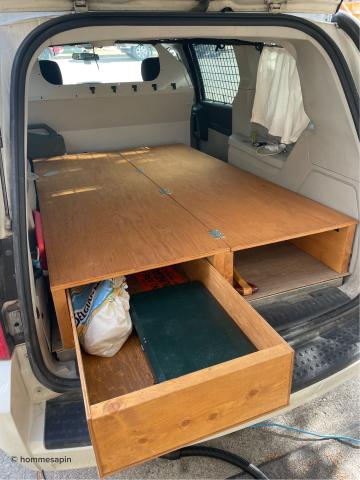
Some campers, however, choose to remove the seats entirely and install a custom wooden platform in the back, where they place their mattress. If this approach interests you, keep in mind that, for safety reasons, it is recommended that you entrust the design of this adapted structure to a professional team rather than attempting to do it yourself.
Maude’s tip
My friend Maude has been camping in her car for more than 10 years. Her best tip: forget air mattresses! Invest instead in a good memory foam mattress, quality sleeping bags, and soft pillows. You will sleep in your car as comfortably as you do at home, and you may just fall in love with this way of camping.
Step 3: Get equipped for cooking
When camping, eating is part of the experience! To be able to cook your meals anywhere, pack a basic set of supplies, just as you would for traditional camping: a water jug holding several litres, a small stove, a cast-iron skillet and a few small pots, cooking utensils, cutlery, an Italian coffee maker, and essentials like a can opener, a cutting board, a chef’s knife, and a lighter.
A standard or electric cooler will come in handy to bring fresh food. For slightly longer stays, consider vacuum-packed meals that you simply reheat, or freeze-dried food sold in pouches at outdoor stores. Just add boiling water to rehydrate the food, and it is ready!
Never cook inside the car; set up nearby instead. Also remember that sleeping in a car while impaired can, in some situations, constitute a criminal offence. Stay vigilant!
Step 4: Get organized to maximize your comfort
To enjoy a great camping experience, organization is essential. Stackable clear plastic bins will help you keep your small space tidy. To find what you need more easily, organize your bins by theme: kitchen, food, small equipment, such as headlamps, nylon rope, and a first-aid kit, etc.
Other accessories can also greatly improve your comfort. Here are a few:
- window screens, to allow air to circulate in the car, especially at night;
- suction-cup curtains, for more privacy and darkness, which you can easily make yourself;
- a portable power bank to charge cell phones, computers, and cameras;
- a small tool kit with what you need to repair a flat tire or any other minor breakdown;
- a solar camping shower;
- a tarp for rainy days;
- folding chairs;
- a hammock;
- a roof box to carry a little extra gear;
- string lights to create a warm atmosphere, a must-have, in my opinion.
Can you camp anywhere?
Even though sleeping in your vehicle gives you a great deal of flexibility, it is important to do a few checks before parking somewhere for the night. Municipal bylaws may prohibit the prolonged occupation of a vehicle on a street or in a commercial parking lot. At campgrounds, national parks, and wildlife reserves, camping in your car is generally allowed on the site you have reserved, but it is best to confirm in advance, so you know what restrictions apply.
The iOverlander app is a kind of community-based GPS that helps you find free or paid places to sleep on the road, as well as nearby services such as gas, drinking water, showers, Wi-Fi, toilets, garages, etc. The app is based on travellers’ reviews, which makes it reliable. You can download maps to use offline, which is practical when there is no cell service.
4 tips for safer outings
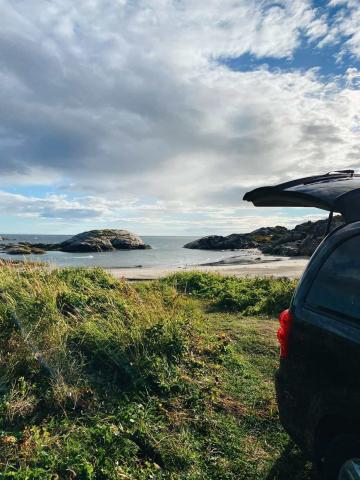
- Hire a professional company to modify your car. For safety reasons, we do not recommend attempting to do this yourself.
- Accessories and equipment added to your car, such as a bike rack, luggage rack, GPS and dashcam, etc., can affect the value of your vehicle. To make sure you receive the right amount of compensation in the event of an accident, contact your damage insurance representative before you leave. Psst! It is also recommended that you contact them before even purchasing your accessories and equipment to confirm whether they can be covered by your policy.
- Check that your setup is watertight, regardless of the accessories and equipment you will be using to camp. Water seeping in your car can cause significant damage that may not be covered by your car insurance.
- When camping in your car, never leave the vehicle engine running, even when it is cold. This will help reduce the risk of carbon monoxide poisoning.
A style of camping worth discovering
Camping in your car is not only fun, but it is also a great way to explore Quebec and the surrounding provinces. Since you bring your “home” with you, you can discover places that are harder to access and have no accommodation nearby. It also allows you to move around more often within a short period of time, without having to set up and take down camp every day. In that sense, it is a simple and smart way to optimize your vacation and make the most of it.
This article was written by an external contributor. The opinions expressed are those of the author and do not necessarily reflect those of Promutuel Insurance.